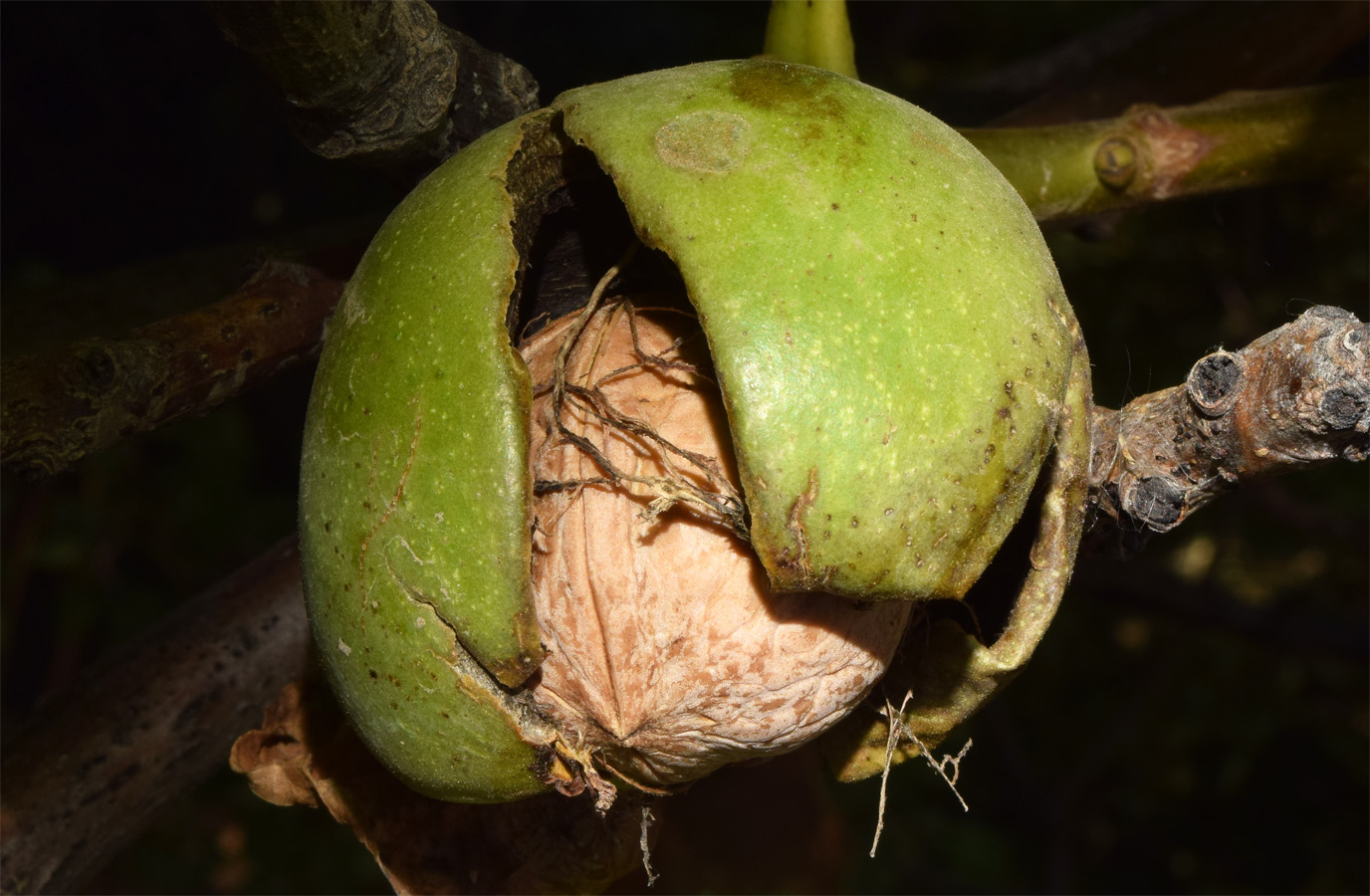
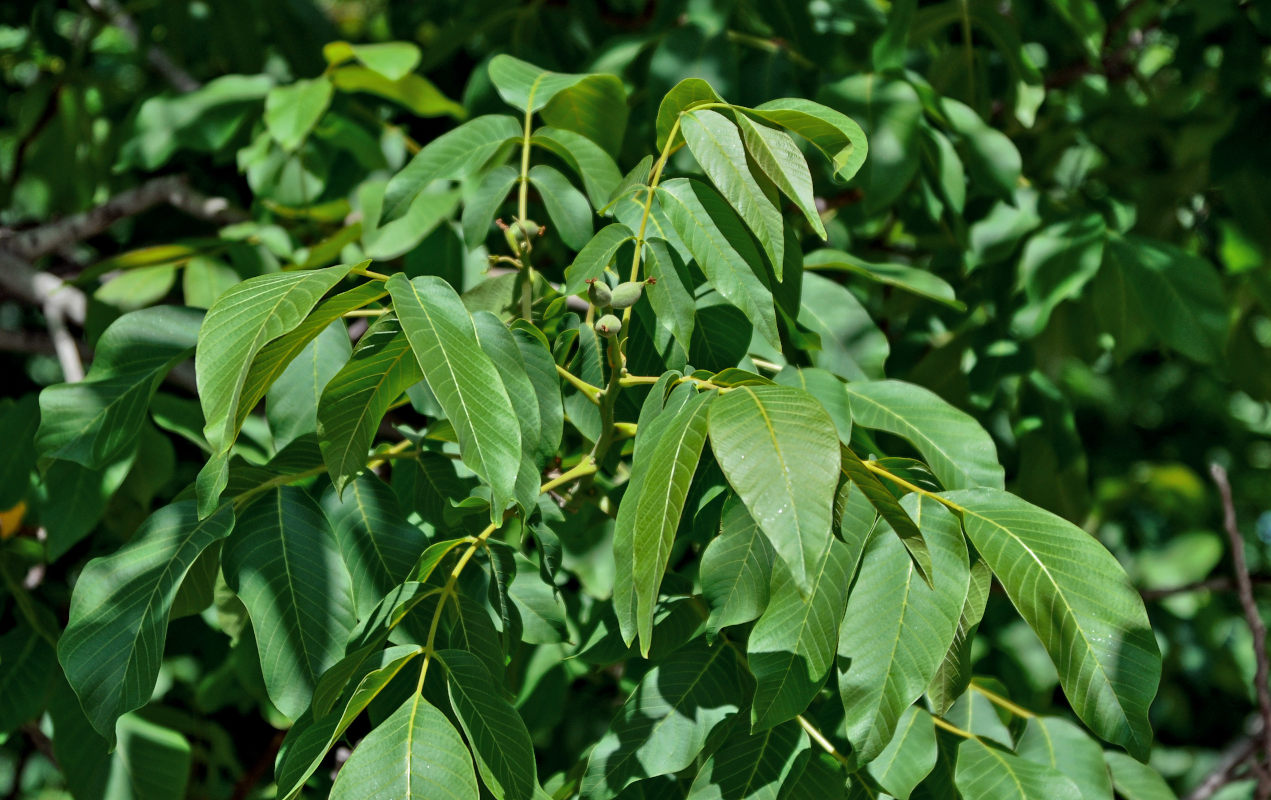
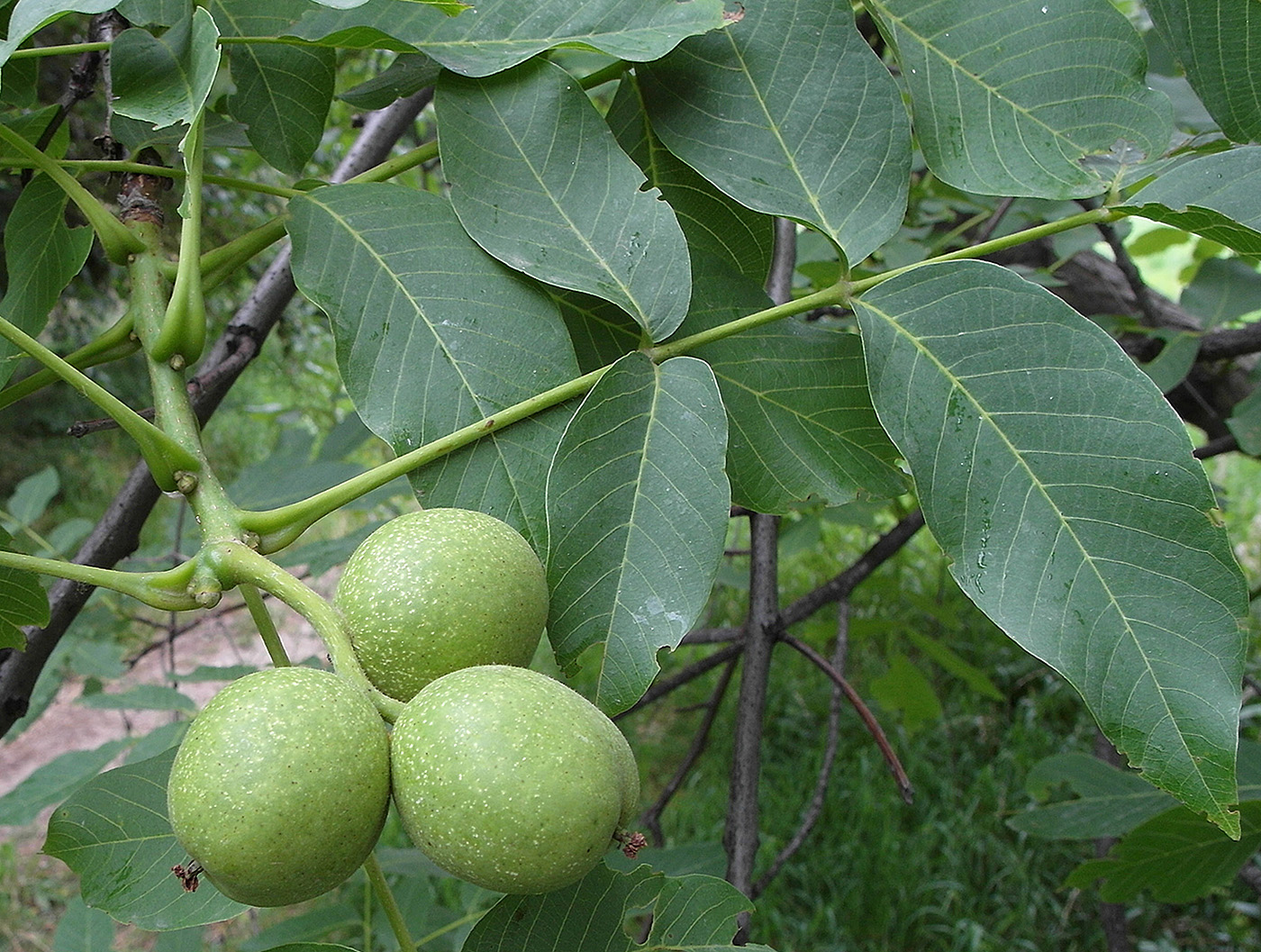
EUROPIAN WALNUT (Juglans regia L.) is a tree that reaches a height of 25-30 meters, a diameter of 1-2 meters. The crown is wide, spherical. The bark of the branches and branches is smooth, shedding a thin layer. It blooms simultaneously with the emergence of leaves (in April). It is pollinated by the wind from the outside. The fruits are arranged in clusters of one or several. They ripen in September, are brownish-green, oval in shape, the upper serrate shell of the fruit splits when ripe. The nut is easily separated from it, the shell of the nut is thick, the upper side is rough. The kernel is edible and has high biochemical properties. A brown dye is obtained from its bark, leaves, and trunk. It is used to dye silk and yarn. In addition, the shell contains about 20% of coloring substances. It reproduces well from walnut seeds. Before sowing, the seeds must be stratified. The root is thick and fibrous, penetrating deep into the soil. It also reproduces from the trunk and by cuttings. Source: Dendrology. 2015.
EUROPIAN WALNUT